
Special welcome gift. Get 30% off your first purchase with code “360”

CUET 2026 Self Paced Program
Categories: CUET
Wishlist Share
Share Course
Page Link
Share On Social Media

About Course

CUET Verbal Ability

Master the art of Verbal Ability and soar to success in the CUET exam with our comprehensive course!

Enhance your language skills, expand your vocabulary, and ace the verbal section effortlessly.”

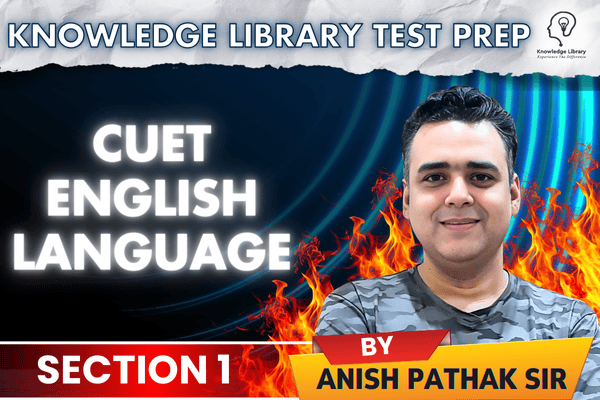
Curated by By Faculty – Anish Pathak 

About the course

Start your preparation for CUET with a Self-Paced Program to learn at your own pace, time, and convenience.

  • 16 Video lessons
  • Covers English Language Section
  • Learn anytime from anywhere
  • Doubt Sessions available on request
  • Enhance your learning for CUET 2026/2027
  • Free Demo Available
Verbal Ability Session 1  Introduction : Verbal Ability
Verbal Ability Session 2  Active and Passive Voice
Verbal Ability Session 3 Grammar Rules – Volume 1
Verbal Ability Session 4  Grammar Rules – Volume 2
Verbal Ability Session 5 Grammar Rules – Volume 3
Verbal Ability Session 6 Confusing Words
Verbal Ability Session 7 Idioms
Verbal Ability Session 8  Sentence Rearrangement – 1
Verbal Ability Session 9  Synonyms and Antonyms
Verbal Ability Session 10  Narration: Direct and Indirect Speech
Verbal Ability Session 11 Sentence Rearrangement – 2
Verbal Ability Session 12 Superfluous – Misused Words
Verbal Ability Session 13  Types of Nouns
Verbal Ability Session 14 Vocabulary I
Verbal Ability Session 15 Vocabulary II
Verbal Ability Session 16  Reading Comprehension
Show More

What Will You Learn?

  • In this CUET English self-paced program, you will develop strong command over all sections of the English Language syllabus. You will learn grammar concepts such as nouns, tenses, voice, narration, and error detection, along with vocabulary skills including synonyms, antonyms, idioms, confusing words, and one-word substitutions. The course also covers reading comprehension strategies, sentence rearrangement, and usage-based questions. You will practice with CUET-pattern MCQs, previous year questions, and mock tests to improve speed and accuracy. Step-by-step explanations, shortcuts, and revision techniques will help you build confidence, manage time effectively, and score higher in the CUET English Language entrance exam.

Course Content

Introduction to CUET English Language section
The introduction session for the English Language section of the CUET entrance exam familiarizes students with the exam pattern, syllabus, and marking scheme. It outlines key focus areas such as reading comprehension, vocabulary, grammar, verbal ability, and usage-based questions. The session explains the importance of accuracy, time management, and smart question selection. Students are guided on common question types, difficulty levels, and frequent error areas. Tips on effective preparation strategies, regular practice, and revision techniques are shared to build confidence. This session sets a clear roadmap for systematic preparation and improved performance in the CUET English Language exam.

Grammar Rules
75 Grammar Rules and Fundamentals with Anish Pathak

Synonyms and Antonyms
The synonyms and antonyms session for the English Language section of the CUET entrance exam aims to strengthen students’ vocabulary and word usage skills. It focuses on understanding word meanings, contextual usage, shades of meaning, and common word pairs frequently asked in the exam. Students learn strategies such as root-word analysis, prefixes and suffixes, and contextual clues to identify correct options quickly. The session also highlights commonly confused words and high-frequency vocabulary from previous CUET papers. Regular practice through MCQs and examples helps improve accuracy, expand vocabulary, and boost confidence in tackling vocabulary-based questions in the CUET English Language exam.

Vocabulary Tricks
The vocabulary session for the English Language section of the CUET entrance exam focuses on enhancing word power and effective usage. It covers high-frequency words, idioms and phrases, one-word substitutions, phrasal verbs, and commonly confused terms. Students learn techniques such as context-based meaning, word roots, prefixes and suffixes, and elimination methods to solve questions accurately. Emphasis is placed on vocabulary drawn from previous CUET papers and standard reading sources. Practice through MCQs and short exercises helps reinforce learning. This session builds confidence, improves comprehension skills, and ensures better performance in vocabulary-based questions in the CUET English Language exam.

Reading Comprehension
The Reading Comprehension session for the English Language section of the CUET entrance exam trains students to understand, analyze, and interpret passages accurately within limited time. It focuses on key skills such as identifying main ideas, supporting details, tone, inference, vocabulary in context, and factual versus opinion-based questions. Students learn effective reading strategies like skimming, scanning, and keyword spotting to improve speed and accuracy. The session also addresses common traps and elimination techniques used in MCQs. Practice with CUET-style passages helps enhance comprehension ability, critical thinking, and confidence, enabling students to score well in the Reading Comprehension section.

Sentence Rearrangement
The sentence rearrangement session for the English Language section of the CUET entrance exam focuses on developing logical thinking and coherence skills. It trains students to arrange jumbled sentences into a meaningful and grammatically correct sequence. Key concepts such as identifying opening and concluding sentences, recognizing connectors, pronouns, transition words, and cause–effect relationships are emphasized. The session introduces step-by-step approaches and elimination techniques to solve questions efficiently. Through CUET-pattern MCQs and guided practice, students learn to improve accuracy and speed. This session strengthens understanding of sentence flow, structure, and overall paragraph organization for exam success.

Words
The misused and superfluous words session for the English Language section of the CUET entrance exam focuses on identifying incorrect word usage and unnecessary repetition in sentences. Students learn to recognize commonly misused words, confusing pairs, and redundant expressions that affect clarity and correctness. The session emphasizes grammar rules, context-based understanding, and precision in language. Techniques such as spotting excess words, correcting awkward phrasing, and choosing concise alternatives are discussed. Practice with CUET-style MCQs helps students avoid common traps and improve sentence accuracy. This session enhances clarity of expression, grammatical correctness, and performance in error-spotting questions.

Idioms
The idioms session for the English Language section of the CUET entrance exam focuses on improving students’ understanding of commonly used idiomatic expressions and their meanings. It covers high-frequency idioms asked in previous CUET and similar competitive exams, along with their contextual usage. Students learn how to interpret idioms correctly without relying on literal meanings and avoid common misconceptions. The session also introduces strategies such as context clues and elimination techniques to choose accurate options in MCQs. Practice through examples and short exercises helps strengthen vocabulary, enhance comprehension, and boost confidence in handling idiom-based questions in the CUET English Language exam.

Voice – Active and Passive Voice
The Voice (Active and Passive) session for the English Language section of the CUET entrance exam focuses on understanding sentence structure and correct verb usage. It explains the rules for converting sentences from active to passive voice and vice versa, across different tenses and sentence types. Emphasis is placed on identifying subjects, objects, and appropriate auxiliary verbs. The session highlights common errors, shortcuts, and patterns frequently asked in CUET MCQs. Through examples and practice questions, students learn to choose grammatically correct options quickly. This session strengthens grammatical accuracy, clarity of expression, and confidence in solving voice-based questions in the CUET English Language exam.

Narration – Speech
The Narration (Direct and Indirect Speech) session for the English Language section of the CUET entrance exam focuses on mastering the rules of reporting speech accurately. It covers changes in tense, pronouns, time and place expressions, and reporting verbs while converting direct speech into indirect speech and vice versa. Emphasis is placed on identifying statement, question, command, and exclamatory forms. The session highlights common mistakes and shortcuts relevant to CUET MCQs. Through structured examples and practice questions, students develop clarity and speed. This session enhances grammatical precision, comprehension, and confidence in tackling narration-based questions in the CUET English Language exam.

CUET Previous Year 20 Mocks
CUET Previous Year Mocks for the English Language entrance exam are designed to familiarize students with the actual exam pattern, difficulty level, and question trends. These mocks include questions from reading comprehension, grammar, vocabulary, verbal ability, and usage-based sections as asked in past CUET papers. Practicing previous year–based mocks helps students understand frequently tested topics, improve time management, and identify strengths and weak areas. Detailed analysis after each mock enables focused revision and error correction. Regular practice with these mocks builds exam temperament, boosts confidence, and significantly enhances accuracy and performance in the CUET English Language section.

Student Ratings & Reviews

No Review Yet
No Review Yet